

Acne and rosacea are the two skin conditions I see confused most often - by patients, and quite often by the practitioners who treated them before they reached me. The confusion is understandable: both cause red spots on the face of adults. But the treatments are different, some acne treatments actively aggravate rosacea, and getting the diagnosis right is the first step in getting better.
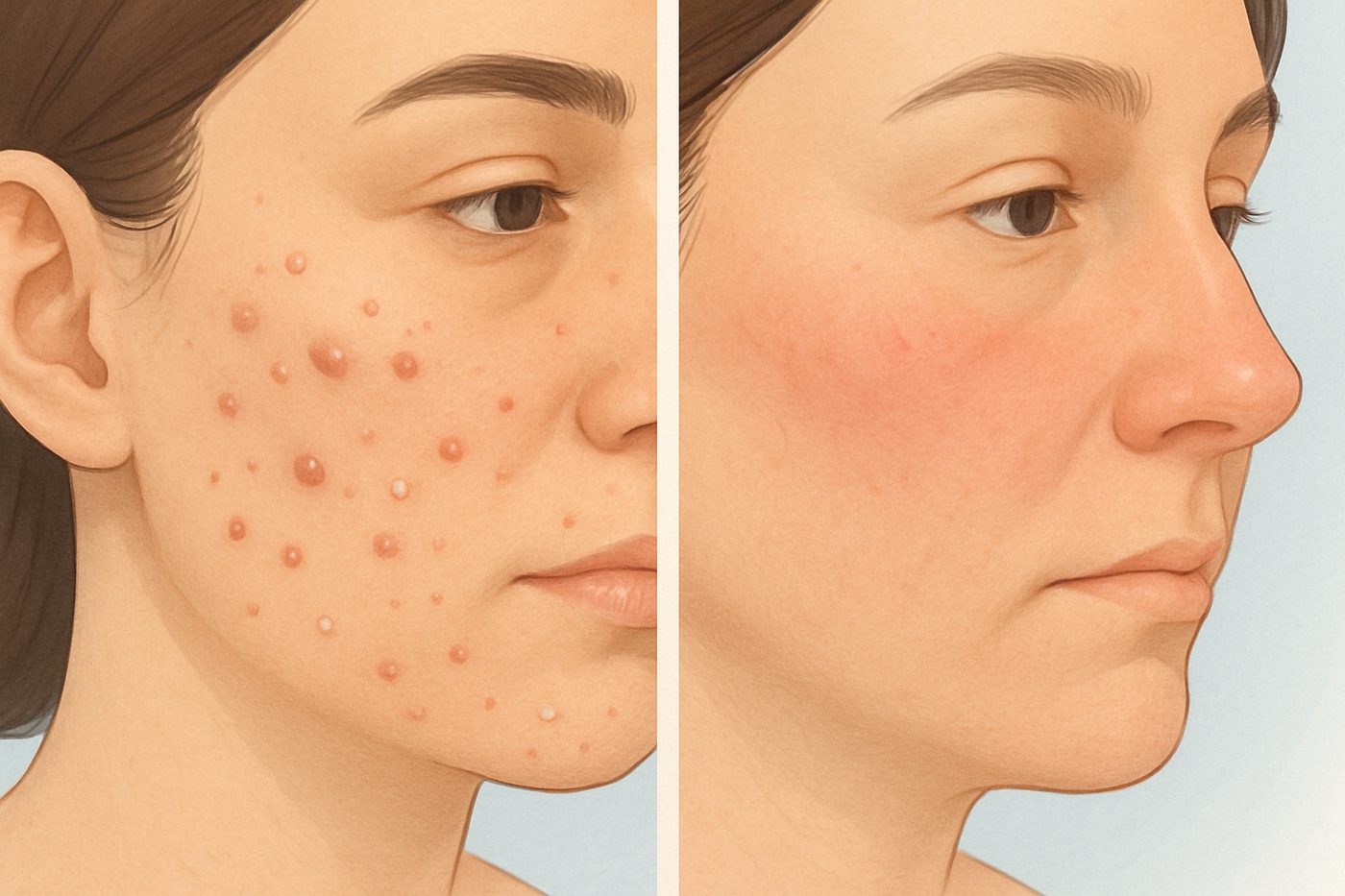
The most useful clue: blackheads and whiteheads
Look closely for blackheads and whiteheads (comedones). Acne has them; rosacea does not. Spots on a background of blackheads, whiteheads and clogged pores mean acne. Red bumps on skin that flushes easily, with no blackheads anywhere, point towards rosacea.
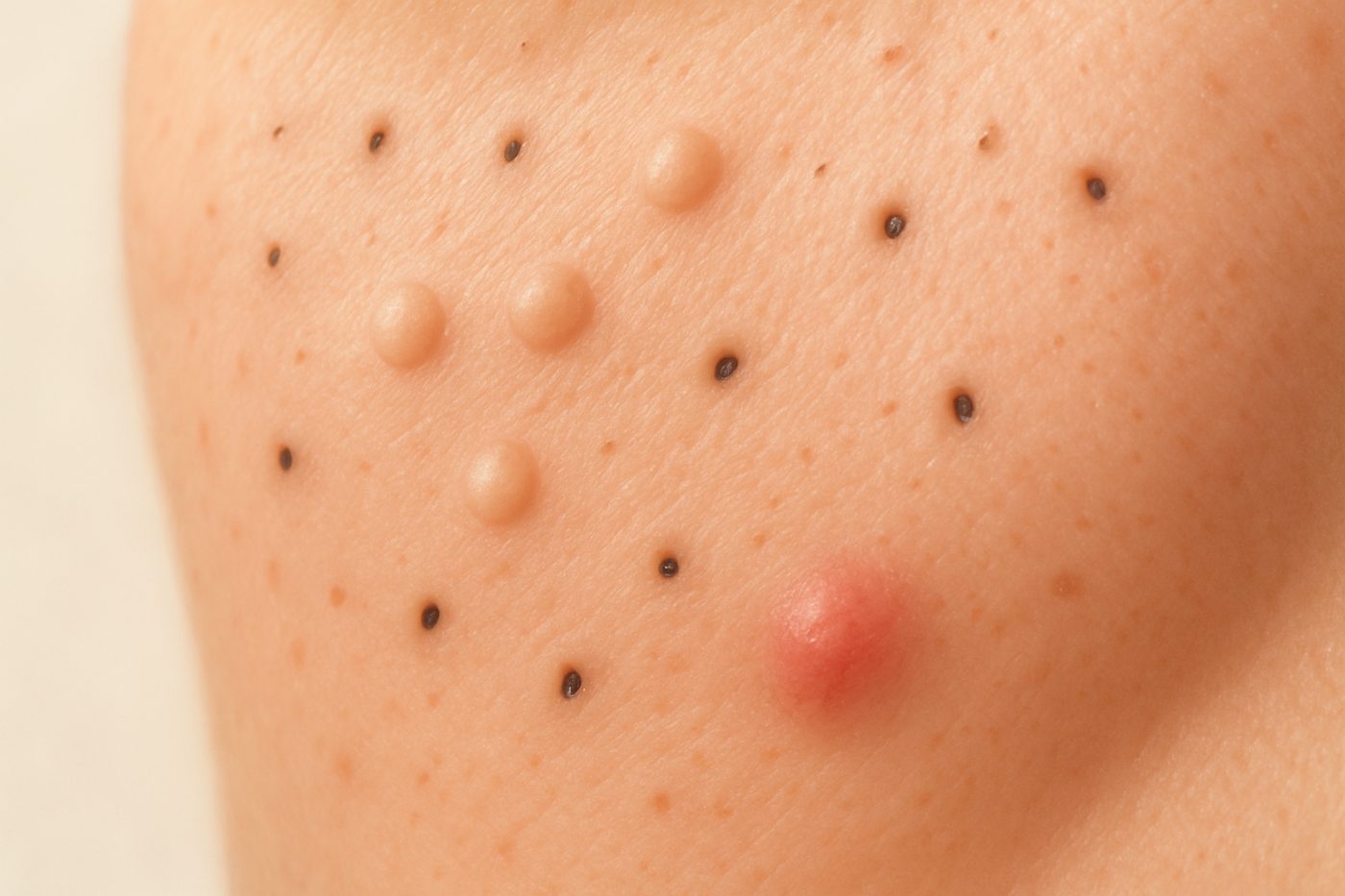
Where the spots appear
Acne can affect the whole face, and very commonly the chest, back and shoulders. Rosacea usually affects the centre of the face - the cheeks, nose, chin and forehead - and does not affect the body.
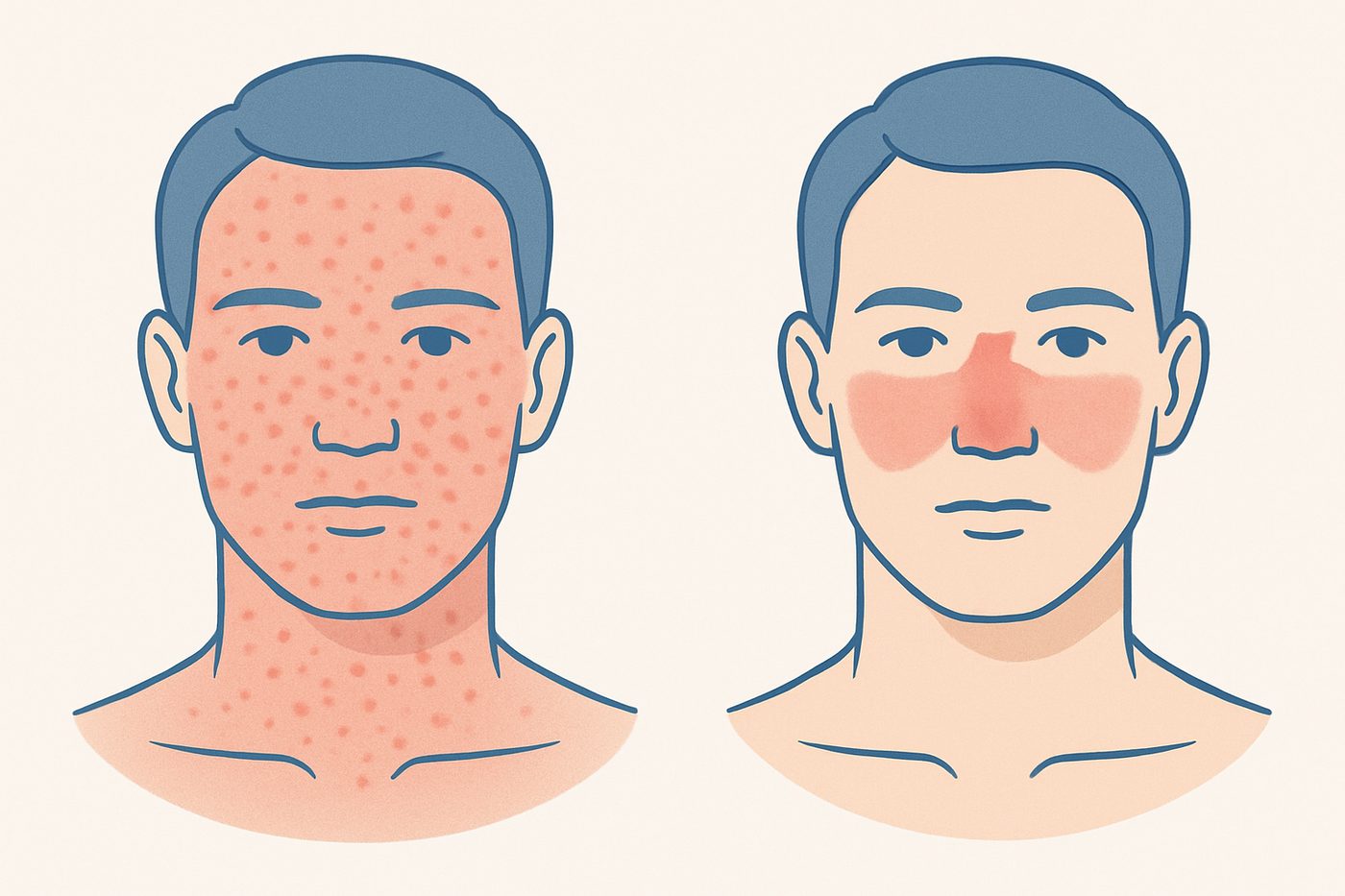
Flushing and persistent redness
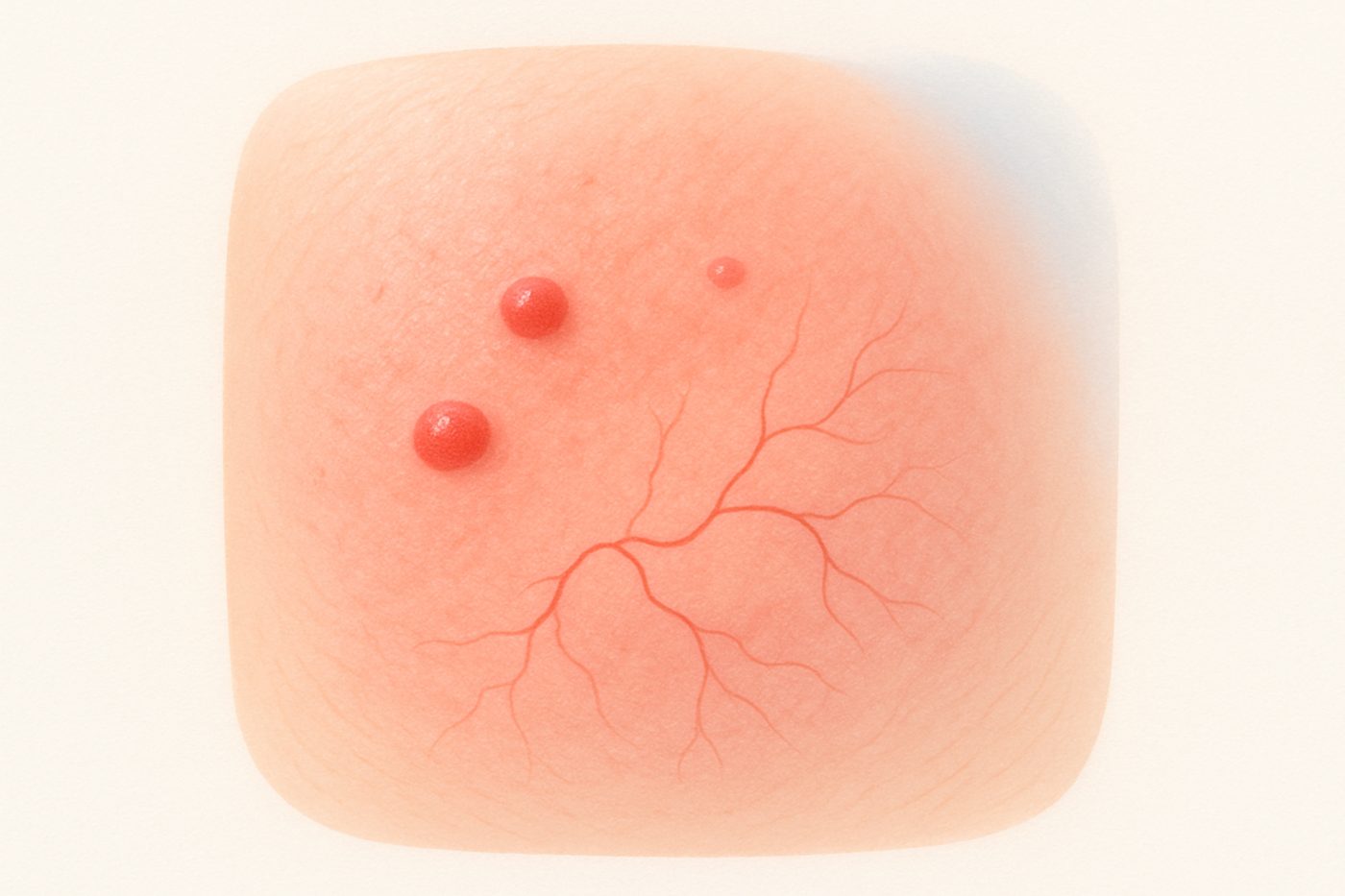
Rosacea is linked to flushing. This can happen spontaneously or can be triggered by stressful situations, heat, exercise, alcohol, spicy food or hot drinks. Over time the redness can become persistent, sometimes with small visible blood vessels on the cheeks and nose. Acne does not flush. If you are experiencing flushing that is a strong pointer to rosacea.
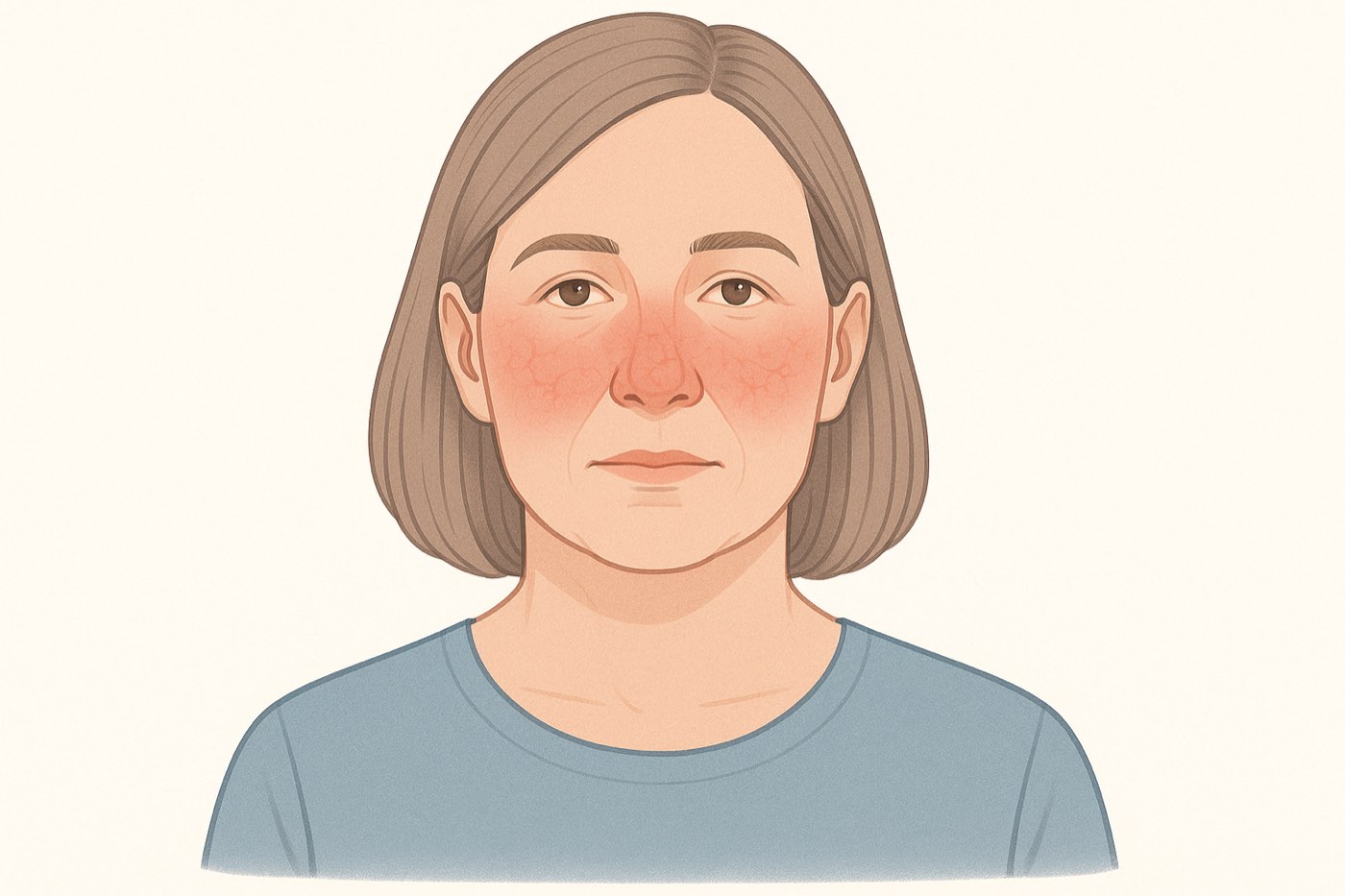
Age and skin type
Acne usually begins in the teens or twenties, although adult acne is also common - particularly in women, often flaring around the jawline before periods. Rosacea typically appears after 30. Acne skin tends to be oily; rosacea skin is often dry, sensitive, and stings when products are applied.
Can you have both?
Yes - particularly women in their 20s-40s. Other conditions mimic both: seborrhoeic dermatitis and perioral dermatitis are regular imposters. Distinguishing them is a normal part of a dermatology assessment.
Why the difference matters
The treatments are not interchangeable. Benzoyl peroxide and many acne products can inflame rosacea, while rosacea treatments such as ivermectin and metronidazole don't work for acne. Treating the wrong condition wastes months and can leave the skin worse than when you started.
If you are not sure
You do not need to work it out yourself - reaching the diagnosis is part of the consultation. In most cases a detailed history, good photographs and a video consultation are enough to tell these conditions apart and start the right treatment. Where the diagnosis remains genuinely unclear, an in-person examination settles it.
